


Law Conference of Champions 2026 recap: Consent, compliance, and what brands are watching now
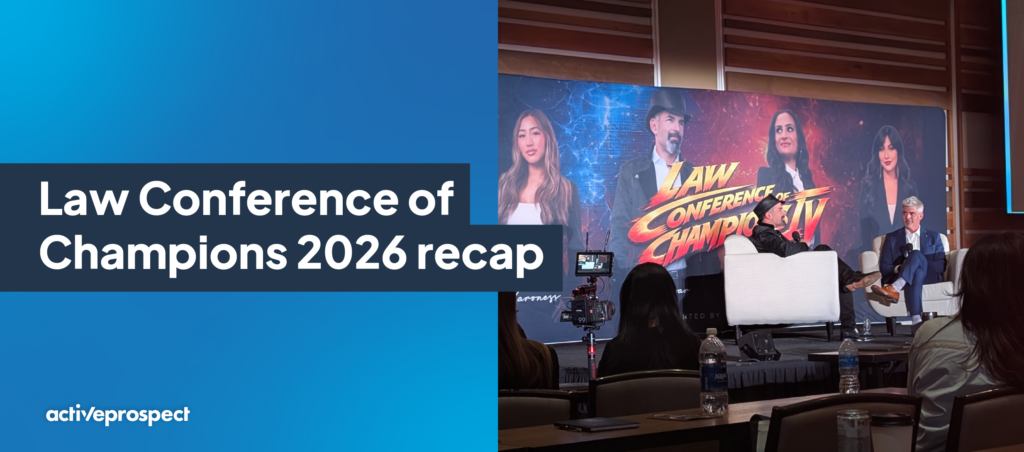
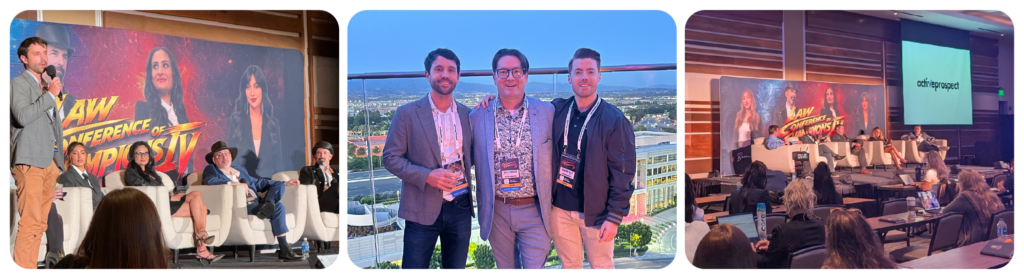
The Law Conference of Champions 2026 brought together attorneys, compliance leaders, marketers, and technology providers for several days of detailed discussion about where TCPA, consent, privacy, and lead generation compliance are heading next.
For ActiveProspect, the event was an opportunity not only to join those conversations, but to see clearly how the market is thinking about proof of consent, litigation readiness, revocation handling, data accuracy, and the growing overlap between TCPA and privacy risk.
One of the clearest themes throughout the event was that consent documentation is no longer being treated as a box-checking exercise. Across sessions and conversations, the standard being discussed was much more operational: Brands want evidence that can hold up under scrutiny, support vendor vetting, and help them respond quickly when legal questions arise.

Consent is still central, but the standard is getting more specific
A major focus of the conference was how consent standards continue to evolve in practice.
Speakers repeatedly emphasized that businesses need to think beyond whether consent exists in theory and focus instead on whether they can show what the consumer actually saw, what they clicked, and how the lead was generated. Several discussions reinforced that plaintiffs are increasingly looking for proof, not just policy language or vendor assurances.
That theme showed up strongly in the Consent Counts session, where panelists from Veterans United, DMS, American Family Insurance, and Americor discussed operationalizing one-to-one consent, validating disclosures, and handling revocation in increasingly complex environments.
Among the recurring points:
- Direct consumer intent matters more
- Design and disclosure details matter in litigation
- Visual playback is becoming a more important part of how brands defend consent claims
ActiveProspect’s role in that architecture is crucial, particularly around documenting the details of consumer interaction and providing session-level evidence that can be used in court.
The discussion also highlighted how much implementation work is still required on the brand side. Revocation management, for example, was described as both legally important and operationally demanding, especially for large organizations working across multiple systems and business units.
The takeaway was not just “honor opt-outs,” but make sure your systems, training, and suppression processes can actually do it consistently.
Visual proof and session replay kept coming up
One of the most notable patterns at LCOC was how often the conversation moved beyond traditional certificates toward richer forms of documentation.
That came up not only in brand-panel discussions, but even from the plaintiff perspective. In the “Shark Tank Returns” session, plaintiff attorneys reportedly acknowledged that when a company can quickly produce strong session replay evidence showing a clear disclosure and affirmative click, it can change how a case is evaluated.
That is an important signal for brands: The question is no longer just whether records exist, but whether they are specific, accessible, and persuasive.

Brands are looking for practical answers
There was clearly a need for more practical education. Attendees were not just asking abstract legal questions; they were asking what should be disclosed, when scripts should fire, how consent banners should work, and how companies can protect themselves while still preserving the documentation they need.
The broader message from the conference was that privacy and consent can no longer be managed in separate lanes. Businesses need to understand how TCPA defense, lead documentation, website tracking, and privacy disclosures interact. That is now part of operational compliance.
Wrong numbers, fraud, and bad data remain major risk areas
Another major thread running through LCOC was the data quality concern: The risk of dialing the wrong number, contacting recycled numbers, or allowing fraudulent or manipulated leads into the system. Those are not just performance problems; they were repeatedly framed as litigation and compliance risk.
Conference discussions emphasized that approximately 10% of phone numbers are recycled, that aged leads can create additional exposure, and that companies should think carefully about how they handle wrong-number data.
One especially practical takeaway was that bad numbers may be safer to remove entirely rather than simply suppress in place, since those records can create risk later. Reassigned Number Database (RND) use, number verification, and bot detection all came up as meaningful operational controls.

That connected closely to another major theme from the event: The importance of preventing bad or suspicious leads from entering the dialing workflow at all.
In Puja Amin’s session, checking whether a vendor uses ActiveProspect’s TrustedForm was described as a critical part of assessing whether that source should be considered lower-risk or higher-risk in vendor onboarding.

What stood out most
What stood out most at LCOC 2026 was how much the conversation has shifted from abstract compliance theory to implementation detail. The market is asking more pointed questions now:
- How do we prove consent more clearly?
- How do we keep bad leads out before they create risk?
- How do we handle revocation across complex systems?
- How do we vet vendors based on evidence, not just representations?
The conference made clear that proof, transparency, and operational controls are becoming more central to how brands think about both compliance and lead quality. It also showed that many companies are still actively working through how to apply those principles across their own programs.
For ActiveProspect, participating in LCOC was a valuable chance to be part of those conversations, clarify where the market is still uncertain, and deepen relationships with the people shaping what compliant customer acquisition looks like next.
If there was one broad takeaway from the week, it is this: In today’s environment, consent records, vendor transparency, fraud controls, privacy disclosures, and data accuracy are no longer separate compliance tasks. They are increasingly part of the same operational system.