





Senja Spelman explores lead conversion, stronger partnerships, and scaling home improvement marketing
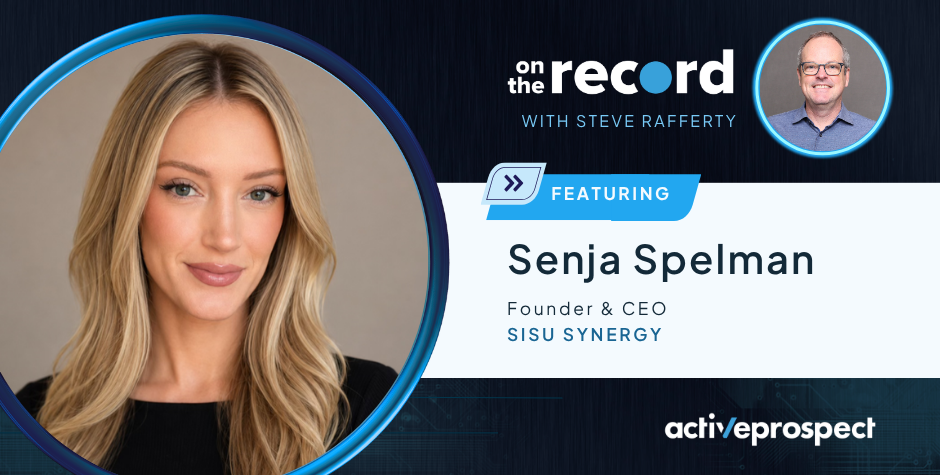
Senja Spelman is a home improvement marketing leader who helps companies lower marketing costs, grow appointment flow, and turn leads into revenue. She is the CEO & Founder of Sisu Synergy, a full-service marketing partner who specializes in home improvement marketing and builds the reporting, processes, and team infrastructure needed to scale. Previously, Senja held marketing leadership roles at Tundraland, Leaf Home, BathWorks, and Home Genius Exteriors. With experience across lead generation, brand storytelling, vendor management, and call center operations, she focuses on helping businesses improve conversion, strengthen lead partnerships, and build more efficient customer acquisition programs.
SR: Senja, you’ve led marketing inside home improvement companies and now help operators through your own company, Sisu Synergy. When a company says, “We need more leads,” how do you determine whether it actually has a lead problem or a conversion problem, and which numbers should teams look at before increasing their spend?
SS:
In my work as a consultant, one of the most common things I hear is, “We need more leads.” And nine times out of ten, the company saying this isn’t doing as much as it could with the leads it already has.
I understand why. Buying more leads feels far more attainable and efficient than digging into why your current leads aren’t performing the way they should. When you’re running with limited manpower, limited bandwidth, or even limited knowledge of what good looks like, that’s a natural reaction. But if you want a long-standing, financially healthy business, you have to do the work. You have to set up the systems, understand your funnel metrics, figure out why they aren’t where they should be, and know what they can be.
In home improvement, we have metrics that hold true across organizations. For a healthy company, the set rate across the entire marketing mix should fall between 28% and 32%. Set to issue should be around 65%. Issued to demo should be 85% to 90%. And net close, which really comes down to your sales team, should land between 25% and 35%, depending on how well known your brand is and how many finance rejects you’re dealing with.
So the question becomes: are your numbers where we’d expect them to be at each stage of the funnel? If they are, great. You’ve earned the right to invest more in paid leads. If they aren’t, you need to fix your process before you spend more money. Otherwise, you’re just paying to pour more leads into a funnel that’s already leaking.
I look at it source by source, too. If I see a source setting at 50%, issuing at 65%, demoing at 90%, and running at a 12% cost of marketing, I’m telling that client to spend as much as they possibly can there. It’s working. But if a source is setting at 10% and issuing at 50%, that’s not something I want to scale. First, we need to figure out whether it’s something we can fix or whether it’s a lead quality problem.
The number I really want people to start paying attention to is cost per issued lead. So many teams fixate on what a lead costs to enter the system. But as we all know in this space, leads set appointments at wildly different rates. What matters is what it actually costs to get in the home, not what it costs to pick up the phone and make a call.
SR: At BathWorks, you helped increase the call center contact rate from 21% to 44%. What changes made the biggest difference, and what would you recommend a home services company audit first if it’s struggling to turn inquiries into appointments?
SS:
Call centers today are up against more barriers than at any other point in the history of this industry. About 57% of smartphone users in the United States are on an iPhone, and Apple has put several barriers in place that make it harder for an outbound call to reach the lead. With iOS 26, people can choose to silence unknown callers, which sends any call from an unrecognized number straight to voicemail, or they can have their phone ask the caller for their name and reason for calling before it ever rings. Even text messages are affected, because texts from unknown senders now go into a separate inbox.
Then there are the major carriers. The big three, T-Mobile, AT&T, and Verizon, each require you to register your outbound phone numbers with them so you aren’t flagged as spam or fraud. On top of that, Americans are, rightfully so, incredibly wary of phone scams. That’s the reality of running an outbound call center right now.
When I came into BathWorks, none of the tools we now use to work around these barriers were in place. Those tools are what helped us take our contact rate from 21% to 44%.
The first thing we did was brand our outbound phone number for leads who were expecting a call from us. If you’re calling your owned and operated website leads or Google leads, your brand should appear on the caller ID so people feel secure knowing it’s you.
We also added SMS. Not everyone wants to answer an outbound call. As more younger people become homeowners, they prefer to text, and they want that convenience. Having SMS as a channel to reach your customers is incredibly important, and it can improve your contact rate tremendously. Even sending a text before you dial helps, because on an iPhone, call screening doesn’t apply to numbers the person has already been in contact with through calls or messages. That first text can be what gets your call through.
And finally, we started meeting customers where they are. Most dialers let you program your call cadence so you’re calling when people are actually likely to answer. A lot of companies call when it’s convenient for them, not when it’s convenient for the customer, and that’s why their contact rate isn’t where it should be. If your call center only dials from 9 to 2, while people are at work, and you aren’t dialing after hours or on weekends, you’re doing yourself a disservice. You’re doing what’s convenient for you, not for the lead.
SR: You’ve spoken about lead buyers showing up as real partners to their lead sellers. What does that partnership look like in practice—from setting expectations to sharing performance data—and how can buyers tell whether an underperforming source needs better collaboration or a replacement?
SS:
A real partnership between lead buyers and lead sellers comes down to transparent communication and transparent data: being able to tell your partner what’s performing and what isn’t, all the way through the funnel. There really are no secrets between lead buyers and lead sellers when it comes to performance. And once both sides take aggressive ownership of what they can and can’t control within the partnership, it makes for a much more lucrative, symbiotic relationship.
When it comes to deciding whether an underperforming source needs better collaboration or a replacement, the first thing I look at is contact rate. If your call center tech stack is set up with the tools I mentioned earlier, and your other lead sources are getting a strong contact rate, around 50%, but one source is only reaching 10% to 15%, that tells you the problem isn’t your dialing structure. It’s the lead source.
I also look at the dispositions your call center is logging on those leads. If you’re seeing a lot of numbers not in service or leads out of area, that’s another sign the partner is generating poor leads that can’t be optimized. Those sources need to be replaced.
Another thing to look at is whether the leads you’re getting are ones you can actually service. If you’re a bath company, and when you finally get someone on the phone it turns out to be a garage door or kitchen cabinet lead, that’s not something you can work with. You need leads for your vertical specifically.
I’d also pay attention to how people react when they answer. If a lot of the people you reach are frustrated, ask to be put on the DNC list right away, or say, “You’ve already called me ten times,” when it’s your first call, look at that on a disposition level too. It usually means your partner is sending the same lead to multiple contractors. That isn’t necessarily a problem, and it’s usually reflected in the pricing, but it can hurt morale in your call center. As an organization, you need to decide whether the cost per issued lead is low enough to justify continuing to call, or whether that type of shared lead is causing more harm than good. If it is causing harm, that’s where collaboration comes in. Can you work with that provider to pay a premium for exclusivity or for first rights to the lead, and is that kind of collaboration even possible at that scale?
I know some people believe lead sellers are entirely to blame for poor lead quality, but I don’t agree. In my experience, a lead seller who wants a long-standing relationship with you is very receptive to feedback and willing to adjust your campaign so it works for both parties. But to do that effectively, they need the data, and they need it quickly. That’s why I recommend setting up automated reports for their team so they can pivot and make timely changes. I’d also encourage lead sellers to be upfront with buyers about what they’re changing on the back end, so buyers don’t feel like they’re sharing all of this data in vain.
SR: You’ve made the case that a brand is more than a logo, and that storytelling can improve lead generation. For a home improvement company under pressure to produce appointments now, how would you balance brand building with immediate results, and measure whether that investment is helping leads convert?
SS:
I’d start by asking what kind of appointments you want to produce for your sales reps. Do you want appointments where your reps have to fight tooth and nail to overcome every objection and every bit of mistrust? Or do you want them walking into a home where the homeowner already feels a sense of trust and positivity before they even open the door?
Brand tells the lead that your company is going to be around for the long haul, and that you stand behind your work and your reputation. Now, don’t get me wrong. If a company isn’t planning to be around for a long time, it shouldn’t invest in its brand. Brand is for companies that want to invest in longevity.
Higher-level branding efforts, like broadcast TV, CTV, and video ads, give you the ability to tell the story of who your company is and why you’re the right organization to trust with the homeowner’s biggest investment: their home. They help articulate what your organization values and how the homeowner should expect to be treated throughout the sales and installation process.
That said, brand doesn’t require tens of thousands of dollars a month if you don’t have the budget for those channels. It can be as simple as a yard sign at every job, a door hanger at every door your canvassing team knocks on, and consistent branded apparel. The key is having your brand show up the same way, every time, so you build frequency. And the entire company needs to be aligned on what the brand looks and feels like, all the way down to internal presentations and initiatives.
For companies that are starting to invest in their brand, I’d encourage them to focus on one metric in their funnel: set rate, because brand lifts every marketing channel. Look at what your set rate was four to five months before you made a consistent investment, and compare it to what it looks like after. If you start to see it climb, that’s the halo effect at work.
SR: “Is it scalable?” is a recurring question in your work. Before a home services company expands into another market or significantly increases lead volume, what needs to be in place, and what warning signs tell you the business is about to scale its problems along with its revenue?
SS:
Home improvement is such a fast-paced industry that a lot of companies put Band-Aids on processes that are meant to be temporary, but those fixes end up becoming permanent because another fire comes up that needs to be put out. So as companies decide to branch into new territories or new lead sources, the fundamental processes need to be created and put in writing in the form of SOPs. Those processes should be so straightforward and clear that anyone walking into the organization can understand what’s being done and how.
Not only that, but you have to inspect what you expect. Creating an SOP alone isn’t enough. There needs to be someone accountable for making sure it’s actually being followed on a consistent basis.
Before scaling, look at how your current lead sources are performing. If they aren’t hitting the funnel metrics we’d expect, especially the sources that should be high intent, that’s a major warning sign. From a marketing perspective, low set rates are one of the first red flags. If you can’t convert the leads you already have, adding more volume or another market is only going to multiply the problem.
Investing in new lead sources without a strong process in place to handle them can cost companies thousands of dollars, whether in wasted spend or in opportunity cost. I know of a company that decided to turn on a competitive lead source at $50,000 a month without any objection-handling training for its call center and without a dialer that could deliver strong speed to lead. After three months and $150,000 in spend, they had netted a total of $82,000. That wasn’t a lead source problem. It was a systems problem. Those processes need to be built at the conception of the campaign, not after it’s already running.
The higher you rise in a company, the further you get from the customer experience. So if you’re a CMO reading this, ask yourself: when was the last time you listened to a call center recording? When was the last time you filled out a lead form with your own company and experienced the customer journey for yourself?