
Insurance leads cost: How much does it cost to buy leads in the insurance industry?
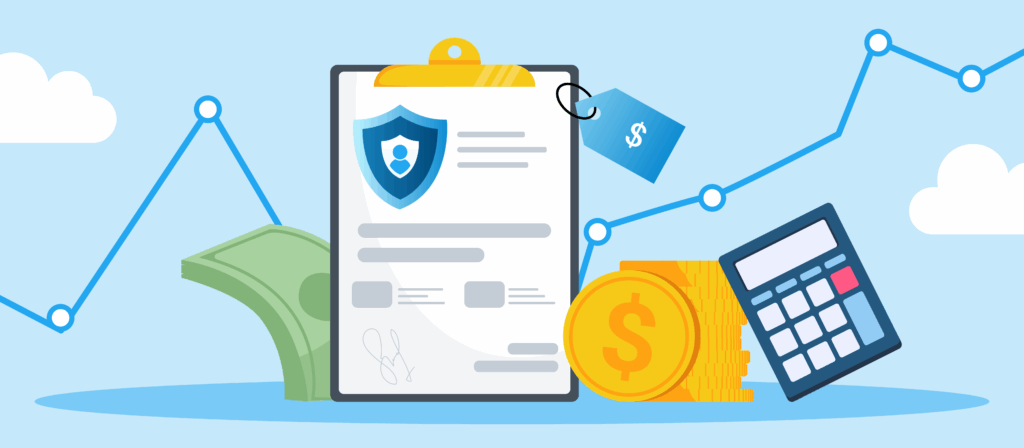
If you are an insurance agent, your pipeline will always need leads. At some point, you probably ask yourself a simple but stressful question: “How much do insurance leads cost, and what should I actually be willing to pay?” The short answer is that insurance leads can run anywhere from a few dollars to more than $200 per lead, depending on the line of business, the type of lead, and whether it is exclusive. For life insurance, the gap between the sticker price and your true cost per client can be especially wide.
This guide walks through the main factors that shape insurance lead costs, the typical price ranges across lead types, what drives life insurance lead pricing in particular, and practical ways to bring those costs down without sacrificing compliance using tools like TrustedForm and LeadConduit.
What affects insurance leads cost when you buy leads?
There is no single “standard” price list. The cost of insurance leads is shaped by a mix of market forces and how the lead was generated. Key factors include:
1. Line of insurance
Some products are simply more valuable than others, so lead prices reflect that.
- Auto and home leads are usually on the lower end, often under $20 for shared web leads in many markets.
- Life insurance leads are more expensive because policies are higher value and require more data about the consumer.
- Niche products like final expense or business insurance may carry premiums if targeting and compliance are more complex.
2. Lead type and intent level
The price of insurance leads depends heavily on what kind of lead you are buying:
- Shared web leads are sold to multiple agents. They cost less but come with more competition.
- Exclusive web leads are sold to a single buyer. They cost roughly 2 to 3 times more than shared leads, but often convert better.
- Live transfer leads (warm phone transfers) are typically the most expensive but come closest to a ready-to-talk prospect.
- Aged leads are older and cheaper, but response and conversion rates are lower.
You are not just paying for a record. You are paying for how close that consumer might already be to buying.
3. Exclusivity and filters
Every layer of targeting increases insurance leads cost:
- Tight geographic filters
- Specific age bands or income ranges
- Policy type or coverage amount
- Filters for homeowner status, credit band, or other underwriting signals
Vendors charge more for this precision, but better targeting can actually drop your cost per acquisition if those leads close at a higher rate. According to Agentero, agents with access to 10 or more carriers close purchased leads at higher rates because they can quote competitively across a wider range of risk profiles.
4. Source quality and transparency
Leads from well-known, transparent vendors usually cost more than leads from “mystery sources,” but for good reason. Reputable providers disclose:
- How they generate leads (search, social, native, comparison sites, etc.)
- What consent language was used
- Whether the lead was validated (email, phone, identity checks)
If you are not sure how a lead was generated or whether the person ever agreed to be contacted, your real risk is not just wasted spend, it is compliance exposure. That directly affects your total cost of buying leads.
How much do insurance leads cost in practice?
Let’s talk ranges. Exact pricing varies by vendor, but recent benchmarks across the industry paint a fairly consistent picture.
Average cost of insurance leads by type
Across common product lines (auto, home, health, life), the typical average cost of insurance leads looks something like this:
- Shared web leads: roughly $10 to $45 per lead, depending on line and targeting
- Exclusive web leads: roughly $45 to $120 per lead
- Live transfer leads: often $80 to $200+ per qualified transfer
- Aged leads: as low as $0.50 to $15 per lead, depending on age and exclusivity
For auto and home lines, many agents see typical lead prices cluster toward the lower end of these ranges, especially for shared web leads. Life and specialty products skew higher.
How much do life insurance leads cost?
When people ask about the cost of life insurance leads, they are usually surprised by how wide the range is.
- Shared life insurance web leads: roughly $20 to $45 per lead
- Exclusive life insurance leads: typically $75 to $150 per lead
- Real-time exclusive or live transfer life leads: commonly $80 to $200+ per transfer
- Aged life insurance leads: often $5 to $15 per lead
Industry analysis of purchased life insurance leads shows that, after you factor in close rates (often in the 2 to 3 percent range) and the time required for follow-up, the total acquisition cost per life client can easily reach $2,000 to $3,000.
If you want more context on the tradeoffs between volume and quality, this is a good time to review what makes a qualified insurance lead and how it fits into your broader lead flow.
How to reduce life insurance leads cost without sacrificing quality
You can lower your life insurance leads cost in two basic ways:
- Pay less per lead
- Increase conversion and retention so your cost per client drops, even if you pay more per lead
In reality, the biggest wins usually come from the second path. Here are practical strategies you can use, with a special focus on tools that make every purchased lead count.
1. Only buy leads with documented third-party consent (TrustedForm)
One major hidden cost of buying life insurance leads is compliance risk, especially under regulations related to telemarketing and TCPA. If you cannot prove that a consumer gave clear, prior express consent to be contacted, you are exposed.
TrustedForm is built to solve that problem by capturing and documenting consent at the moment the lead is generated.
For lead buyers, the TrustedForm lets you:
- Receive a TrustedForm Certificate with each lead, which independently records the consumer’s session
- See a visual session replay and event log that shows exactly how the consumer interacted with the form
- Verify that the consent language meets your standards (clear and conspicuous)
Why does this lower life insurance lead costs?
- You can reject non-compliant or fraudulent leads up front, instead of paying full price for data you cannot safely contact.
- You protect against costly TCPA litigation, which can turn a cheap lead into an extremely expensive mistake.
- You gain visibility into which vendors consistently deliver compliant, high-intent leads so you can shift budget toward what works.
2. Use LeadConduit to evaluate vendors, filter bad leads, and speed up distribution
If you buy from multiple lead vendors, you know that performance is not equal. LeadConduit helps you fix that by sitting in the middle of your lead flows as a real-time decision engine.
With LeadConduit, you can:
- Set filters and rules that automatically accept, reject, or reroute leads based on your criteria.
- Add third-party enhancements and verifications (phone, email, identity, credit proxies, compliance protections, etc.)
- Return rejected leads back to the source with clear failure reasons
- Distribute good leads in real time to your CRM, dialer, or quoting system so your team can call faster
- Use reporting and vendor performance dashboards to measure and compare which sources actually convert
Here is how that directly lowers your insurance leads cost:
- You stop paying full price for leads that are out of territory, incomplete, duplicated, or obviously low intent.
- Faster delivery to sales systems improves speed to lead, which is one of the strongest predictors of conversion for purchased leads.
- Over time, you can reward your best-performing vendors with more volume and negotiate tougher terms with underperformers.
If you are still managing all of this with spreadsheets and manual uploads, tools like LeadConduit are often the simplest way to increase ROI without drastically changing your top-line marketing budget.

3. Track the real cost per client, not just cost per lead
Especially in life insurance, the cheapest lead is not always the best deal. Aged or shared leads at $10 may cost more per policy than exclusive leads at $100 once you factor in:
- Connect rate
- Appointment set rate
- Close rate
- Average premium and persistency
To keep your life insurance leads cost under control:
- Track conversion by vendor, campaign, and lead type
- Compare your numbers to benchmarks in resources like this guide to buying insurance leads and lead quality best practices
- Regularly prune sources that drive a high cost per acquisition, even if their cost per lead looks low
4. Tighten your overall lead generation strategy
Buying leads should fit into a broader growth plan, not replace it. If you want more control over cost and quality, pair lead buying with:
- Strong referral and review programs
- Content and SEO for organic inbound demand
- Partnerships and co-marketing with aligned professionals
Final thoughts
Buying insurance leads is always a balance between cost and quality. The agents who win are the ones who track performance, protect their budgets, and use tools that lift conversion instead of chasing the lowest price.
TrustedForm is the simplest way to make sure every lead you buy is safe to contact. It gives you independent proof of consent, cuts out bad or non-compliant leads, and mitigates costly TCPA risk. If you want cleaner, higher-intent leads, start there.
LeadConduit helps remove the rest of the friction out of your lead flow. It evaluates each lead in real time, filters out the ones that will never convert, and routes the good ones to your sales systems fast. You get clearer vendor performance, better speed to lead, and a lower cost per client.
If you want to get more out of the leads you already pay for, TrustedForm and LeadConduit are two of the quickest ways to increase ROI without draining your budget.