






How to use LeadConduit for TCPA litigators scrubbing

The Telephone Consumer Protection Act (TCPA) is a federal law that oversees U.S. telemarketing calls and text messages. It sets forth stringent regulations for businesses engaging in these forms of communication, with substantial penalties for those who fail to comply. Consequently, it is essential for businesses to have a robust TCPA compliance strategy in place.
An important part of this strategy is using a TCPA litigator scrub. This article will explain what a TCPA litigator scrub is, how it works, and why it matters for companies in the financial services sector. We will also look at the benefits of ActiveProspect’s LeadConduit TCPA scrubbing solution to help reduce your TCPA risk.
Introducing LeadConduit’s TCPA scrubbing solution
Are you generating or purchasing a large volume of leads and want to reduce your TCPA exposure? LeadConduit’s TCPA litigator scrubbing solution is designed to be your lifeline. Our user-friendly platform is your key to swiftly and accurately identifying potential TCPA litigants and staying out of potential costly TCPA litigation.
LeadConduit streamlines your lead acquisition and compliance processes to efficiently acquire customers at scale. LeadConduit’s customizable lead flows automatically enhance and filter leads in real time to ensure that the records you are delivering meet the highest of your compliance standards, prior to submission to your CRM.
Within LeadConduit, we harness the power of compliance technologies like Litigator Scrub® by Contact Center Compliance (DNC.com) to review the records submitted and flag numbers associated with known TCPA litigants. By using a TCPA litigator scrub within your LeadConduit flows, you can filter out high-risk leads and focus on what matters most – forging strong customer connections.

Benefits of LeadConduit’s TCPA litigator scrub for financial services
Financial institutions operate within a highly regulated environment, and one of the most complex sets of regulations is the TCPA. LeadConduit’s TCPA litigator scrub integration helps mitigate the risks associated with communicating with known TCPA litigators.
For financial services, particularly, LeadConduit’s TCPA scrub integration solution offers several benefits that streamline compliance and enhance data quality:
- Real-time lead filtering: LeadConduit can screen lead phone numbers against an extensive third-party database of TCPA complainers and litigators in real time, preventing contact with individuals who have been flagged as potential or serial litigators. This proactive approach minimizes the risk of costly lawsuits and helps maintain a positive brand reputation.
- Verification of consent documentation: Add our Trustedform solution to help in the real-time documentation, analysis, record, and retention of web form lead transactions with Trustedform Certificates. This independent verification bolsters an organization’s protection against TCPA litigators and class-action lawsuits.
- Lead fraud detection and DNC list management: LeadConduit offers a thorough TCPA scrub that provides an additional layer of protection for financial institutions. It can flag or block leads that may be linked to lead fraud (bot/non-human generated). Use SuppressionList to cross-reference with your internal DNC lists, reducing the chances of contacting individuals who have opted out of such communications.
- Performance marketing with verified contact information: Beyond TCPA compliance, LeadConduit’s litigator scrub integrations can boost performance marketing by flagging phone numbers and email addresses of known litigators. This, in turn, reduces TCPA litigation risks, enhances the effectiveness of campaigns, and ensures the optimal use of marketing resources, leading to increased ROI and customer engagement.
Frequently Asked Questions about TCPA complainers, litigants, and scrub lists
What is a TCPA litigator scrub?
A TCPA litigator scrub is a service that helps you steer clear of known individuals who are taking legal actions against companies under the TCPA. By using a TCPA litigator scrub, you can avoid reaching out to those who have initiated lawsuits over alleged TCPA violations, which could save you from costly legal battles and fines.
Why should your company use a TCPA litigator scrub?
For starters, it’s a proactive step in staying on the right side of TCPA regulations and steering clear of legal entanglements with litigants. By sidestepping individuals flagged on a TCPA litigator scrub list, you’re saving time, resources, and the headache of managing disputes and the costly legal actions that could follow.
What is a TCPA litigator list?
A TCPA litigator list is a third-party database service that aggregates the names, phone numbers, and other identifying details of individuals or entities who frequently file TCPA lawsuits. This list is used by businesses, particularly those involved in telemarketing or customer outreach, to identify and avoid high-risk individuals who are likely to pursue legal action related to calls, texts, or other communications claiming they are unsolicited.
How does LeadConduit’s TCPA scrubbing solution work?
ActiveProspect partners with Contact Center Compliance (DNC.com) to offer their Litigator Scrub® service directly through LeadConduit.
Once you get started with LeadConduit, simply edit your LeadConduit flow, switch to the “Steps” tab, and add an enhancement step.

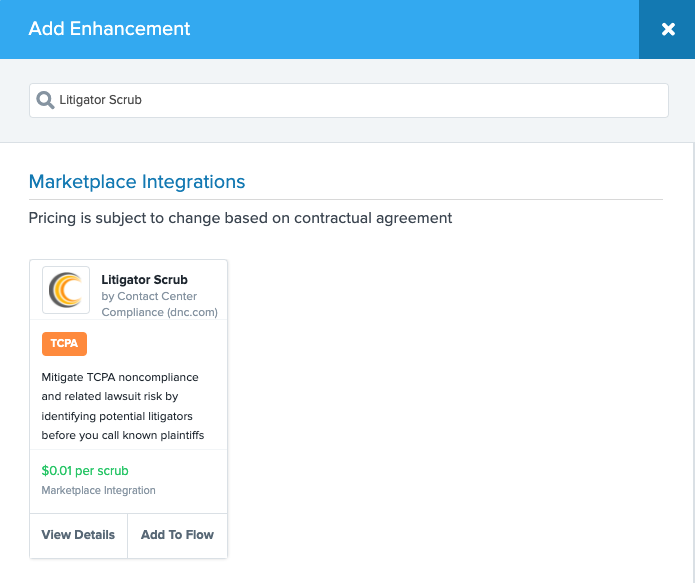
Search for Litigator Scrub® and select “Add to flow.”
You will be asked if you want to fail and reject leads that are identified as known litigators.
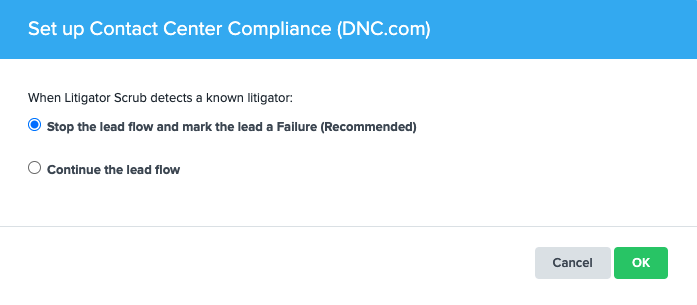
Once you make your selection, you are finished! Since this is a marketplace enhancement, there is no need to enter credentials thanks to our partnership with Contact Center Compliance. Your flow is now set up to use Litigator Scrub®.
TCPA litigation and small business: How is it affected?
TCPA litigation poses serious risks for small businesses, with statutory penalties of $500–$1,500 per call or text, and the potential for costly class-action lawsuits. Even unintentional mistakes, like contacting leads without valid, documented consent, can result in massive financial exposure.
Many risks stem from third-party leads, outdated outreach systems, and insufficient record-keeping. To minimize TCPA litigation risks, small businesses should verify consent, use compliant outreach tools, and closely monitor lead vendors to ensure every contact is lawful and defensible.
What are TCPA litigation trends?
TCPA litigation is evolving rapidly, and 2024 marked a shift in both regulatory enforcement and plaintiff strategy with the proposed one-to-one consent requirement. Although the proposal was shut down at the beginning of 2025, that does not mean that TCPA litigation trends are declining. On the contrary, TCPA numbers are once again spiking.
Looking ahead to 2026, experts predict:
- A continued spike in lawsuits centered on revocation following the FCC’s new rules took effect in April.
- Continued confusion and circuit splits around whether FCC guidance is binding, especially following the ruling in the McLaughlin v. McKesson case.
- An uptick in state-level TCPA analog lawsuits, especially in jurisdictions like California and Florida, where statutory damages and attorney fee provisions are more aggressive.
In short, companies should expect more nuanced, jurisdiction-sensitive litigation. Staying ahead means not only updating consent and revocation systems but also auditing vendor practices, complaint handling, and jurisdictional exposure.
Conclusion
LeadConduit’s TCPA litigator scrub is a powerful tool to help financial institutions navigate the ever-changing regulatory environment and protect themselves from potential legal challenges.
By employing this robust solution, you can effectively manage the risks associated with consumer communication, bolstering TCPA compliance and building trust with your customers.
With real-time filtering, accurate consent verification, fraud prevention, DNC list management, and enhanced performance marketing strategies, LeadConduit can help you deliver great customer experiences while protecting your business. Embrace TCPA compliance and take your marketing to the next level with LeadConduit’s comprehensive litigator scrub solution.