





Quality leads: How to identify, generate and buy them
TL;DR
- Quality leads are accurate, authentic, properly documented, relevant to your offer, and likely to progress toward a sale.
- To increase quality, Identify leads using fit, intent, contactability, consent, source, freshness, and downstream performance, not just cost alone.
- Generate leads by targeting the right audience, aligning forms with intent, documenting consent, validating data, and acting on performance feedback.
- Buy leads by defining acceptance criteria, evaluating providers, screening records in real time, and comparing sources by revenue outcomes.
Overview
A campaign can look efficient on paper and still disappoint sales. Cost per lead may fall while the pipeline fills with disconnected numbers, duplicate records, ineligible prospects, and consumers who never intended to hear from your business. The dashboard celebrates; the revenue report does not.
This gap exists because lead volume and lead quality measure different things. Performance marketers, lead operations teams, and sales managers need to know whether leads are reachable, relevant, authentic, compliant with internal requirements, and likely to convert. That applies whether the business generates leads through its own channels, purchases them from third parties, or does both.
A complete strategy connects acquisition data with downstream results, filters unwanted leads, and uses sales outcomes to improve future decisions.
What are quality leads?
Quality leads are prospects who satisfy your business requirements and demonstrate a realistic potential to become customers. They typically share several characteristics:
- Accurate, reachable contact information
- Genuine interest or relevant intent
- Alignment with your audience and eligibility criteria
- Documented consent that meets your requirements
- A transparent, trustworthy source
- Timely delivery and prompt follow-up
Quality is contextual. A homeowner requesting an HVAC quote may be valuable to a local contractor but useless outside that service area. A lead can also be unsuitable if its data is fabricated, consent is unverifiable, or it falls within an agreed duplicate window.
For lead generators, quality means attracting the right consumers and producing accurate, transparent records that buyers can confidently evaluate. For lead buyers, it means acquiring leads that satisfy acceptance rules and produce worthwhile downstream results. In both cases, the ultimate test is not whether a form was submitted. It is whether the lead contributes to qualified opportunities, sales, and revenue.
How to identify quality leads
Identifying requires information from the point of generation through the final sales outcome. Start with these signals.
1) Fit and eligibility
Determine whether the prospect matches the product, geography, demographic, firmographic, or service requirements. Define these attributes before launching a campaign or accepting vendor traffic so teams do not qualify leads by instinct.
2) Intent and engagement
Consider what the consumer requested and the behavior surrounding the conversion. A pricing request, appointment booking, or detailed quote form typically signals stronger intent than a low-commitment content download. Time on page, form interaction, and other behavioral data can add context, but no single signal should decide quality alone.
3) Contact-data accuracy and authenticity
Validate phone numbers, email addresses, names, and locations. Then look beyond valid formatting for bot activity, fabricated identities, suspicious patterns, or inconsistent data. A technically valid phone number does not prove that a real consumer submitted it or wants your offer.
4) Consent and source transparency
Confirm where the lead originated, what the consumer saw, when the form was submitted, and whether the consent event can be documented. For purchased leads, identify the publisher, originating domain, landing page, and any intermediaries. Opaque sourcing makes both compliance review and performance analysis harder.
5) Downstream performance
Connect each lead to standardized outcomes, including contact, qualification, appointment, sale, cancellation, revenue, and customer acquisition cost. These metrics show whether leads that looked strong at ingestion actually created value.
How to generate quality leads
1) Target for fit, not reach alone
Build campaigns around the customers your company can serve profitably. Align targeting, keywords, creative, landing-page messaging, and offers with clear eligibility criteria. Exclude irrelevant regions, audiences, and placements before they consume budget.
2) Match the conversion to buyer intent
Set accurate expectations about what happens after submission. Only 25% of marketing leads qualify for direct sales engagement. Use forms that collect the information required to qualify and route the lead without adding unnecessary friction. A clear quote, consultation, or appointment offer usually reveals more intent than a vague call to action.
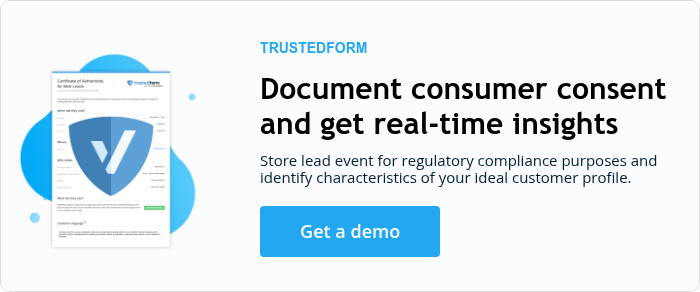
3) Document the lead event with TrustedForm
For leads generated on owned websites, TrustedForm can capture the lead event and issue an independent certificate. That documentation can include the page URL, timestamp, consent language, session replay, and event data. Certificates help lead generators demonstrate authenticity and provide buyers with greater transparency into how consent was obtained.
4) Validate and distribute leads with LeadConduit
LeadConduit can validate and optimize incoming data, identify duplicates, apply acceptance criteria, and route leads to the right buyer or system in real time. Automated flows reduce manual work and prevent records that fail agreed standards from moving downstream.

5) Use buyer feedback to improve campaigns
Ask buyers and sales teams for standardized rejection and disposition data. Compare campaigns by qualified-lead rate, sales, revenue, and returns rather than submission volume. Feed those insights back into targeting, creative, form design, and pricing to improve lead quality continuously.
How to buy quality leads
Businesses can buy leads to scale beyond their owned channels, test new markets, or maintain sales capacity. The goal is not to find the lowest price; it is to acquire leads that produce an acceptable return.
1) Define quality before contacting vendors
Document required fields, service areas, product criteria, lead-age limits, duplicate windows, consent standards, delivery methods, return policies, and rejection reasons. These specifications create a shared definition of an acceptable lead and make vendor comparisons more objective.
2) Evaluate providers and lead sources
Ask how leads are generated, whether they are shared or exclusive, how often they are sold, which domains and traffic channels produce them, and what documentation accompanies each record. Start with controlled volume and verify that the delivered leads match the promised criteria. These questions are essential when selecting a quality lead vendor.
3) Verify purchased leads with TrustedForm
When buying leads, use TrustedForm to review independent lead-event documentation, verify configured consent requirements, retain certificates, and access insights about origin, age, behavior, and bot activity. This visibility helps buyers make decisions before contacting a consumer.

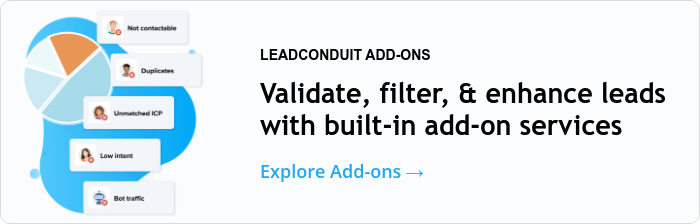
4) Filter leads before CRM entry with LeadConduit
Use LeadConduit to evaluate first and third-party leads in real time. Validate contact data, detect duplicates, add relevant information, apply purchasing rules, reject unwanted records, and route accepted leads based on territory, capacity, or value. Keeping bad records out of the CRM protects budget and sales time.
5) Compare providers by business outcomes
Track acceptance rate, contactability, qualified opportunities, sales, cancellations, revenue, and acquisition cost by publisher and originating domain. A more expensive source may outperform a cheaper one if its leads convert at a higher rate or require less sales effort. Scale vendors based on evidence, not volume promises.
FAQs
1. How can I improve the quality of my online leads?
Tighten audience targeting, align landing-page messaging with the offer, collect the information needed to confirm fit, validate contact data, document consent, and filter fraud or duplicate submissions. Connect CRM outcomes to the original campaign so future changes reflect revenue performance rather than cost per lead alone.
2. How do you measure the quality of generated leads?
Measure generated leads using contact rate, qualification rate, appointment rate, lead-to-customer conversion rate, revenue, customer acquisition cost, and return or rejection rate. Segment these results by source, campaign, landing page, and offer to reveal which acquisition efforts create the most value.
3. How do you generate more and better quality leads?
Focus on channels and audiences that already produce qualified opportunities, then improve the conversion path. Use clear offers, accurate targeting, appropriate form questions, consent documentation, real-time validation, and fast routing. Scale only after downstream results confirm that added volume maintains quality.
4. Where can I buy quality leads for my sales team?
You can buy leads from publishers, lead marketplaces, aggregators, and specialized providers serving your industry. Evaluate how each vendor generates leads, documents consent, validates data, handles duplicates, and reports source information. Review this guide to buying business leads before selecting a provider.
Final thoughts
Quality leads give sales teams real, meaningful opportunities to pursue. Whether you generate leads or buy them, define quality before volume arrives, evaluate every record consistently, and connect acquisition data with revenue outcomes. Use TrustedForm to document consent and understand every lead event, then let LeadConduit validate, filter, and route the right leads into your pipeline.
Stop spending budget on avoidable noise and give your sales team more prospects worth pursuing.